
Collagen vs Elastin: Why Firmer-Looking Skin Needs More Than One Protein
Collagen and elastin are related, but they do different work in skin. Collagen helps create supportive structure, while elastin helps skin recoil after it stretches or moves. When either protein changes, or when their organization changes, skin may look less firm, less resilient, or more crepey.
That distinction matters because “lost collagen” is often used as shorthand for every visible skin change. Skin can change at the neck, arms, abdomen, thighs, or glutes without that change being a body-fat issue or a personal failure. A more useful question is whether the appearance involves support, rebound, texture, contour, or a combination.
Why do collagen and elastin affect skin differently
Collagen and elastin contribute to firmer-looking skin in distinct ways. Think of collagen as part of the skin’s supportive framework, helping it maintain structure. Elastin is associated with stretch and rebound, helping skin return toward its resting position after movement.
In plain language:
Collagen:supportive structure and a firmer-looking foundation
Elastin:stretch, recoil, and the sense of “snap-back”
Collagen is not simply another word for elasticity, and elastin cannot replace structural support. Skin needs both qualities working together, along with an organized network of tissue, to look and feel resilient. Slimline Solutions identifies collagen and elastin as key proteins involved in skin firmness and elasticity.
What can make skin look loose, crepey, or less resilient
Loose-looking or crepey skin can reflect more than one structural change. When collagen support changes, skin may appear less firm or sit differently over the contours beneath it. When elastin changes, skin may seem less able to rebound after ordinary stretching and movement.
Texture adds another layer. A crepey appearance is not evidence that one ingredient is simply “missing.” It can reflect changes in the amount, quality, and organization of collagen and elastin, as well as how skin interacts with the tissue beneath it. That is why two areas of the body can show skin laxity differently, even on the same person.
Why is “skin tightening” a visual shorthand
“Skin tightening” describes an appearance, not one single biological process. Firmer-looking skin may involve structural support, elastic recoil, surface texture, and the way skin lies over underlying contours. Those elements are connected, but they are not identical.
This is also why realistic expectations matter. Non-invasive approaches may be intended to support gradual improvement in the look of skin tone and firmness, rather than create an immediate surgical-style lift or the same result for every person. The appropriate goal depends on the area, the starting appearance, and what someone hopes to improve.
How can a consultation-led plan support skin-firmness goals
A consultation helps separate goals that are often grouped together under “tightening.” The conversation may clarify whether the focus is the appearance of tone, firmness, texture, contour, or several factors at once, then set expectations around a personalized plan.
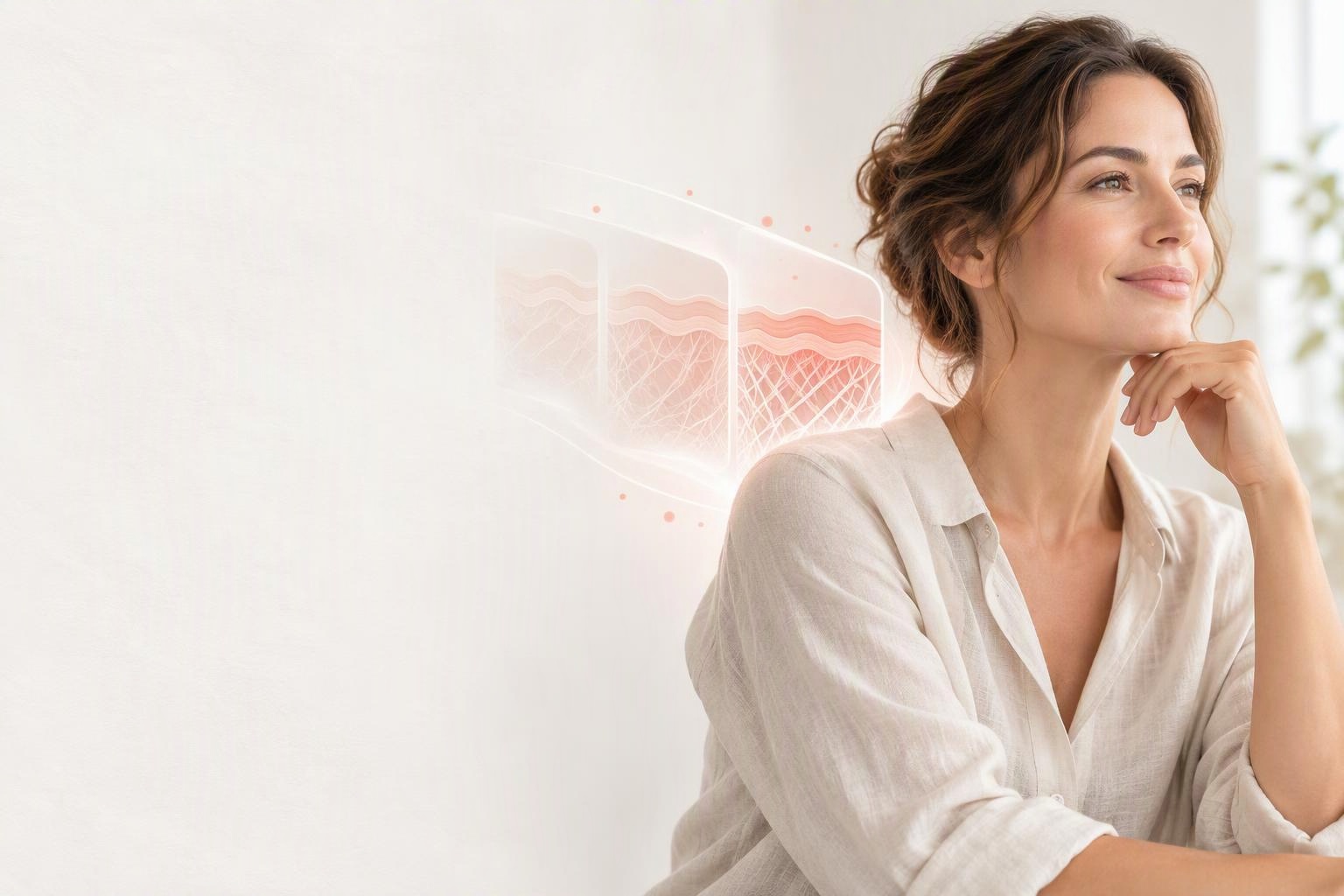
Slimline Solutions uses an FDA-cleared, non-invasive invisa-RED™ technology. The practice describes targeted warmth in deeper skin layers as a proposed way to encourage the body’s natural collagen and elastin production over time. FDA clearance refers to the device, not a guaranteed outcome, and results vary by person.
The clearest way to think about skin firmness is this: collagen provides support, while elastin contributes recoil. Visible change can have more than one contributor, so a personalized assessment is more useful than a one-protein explanation. For a non-invasive approach aligned with individual goals, book a consultation with Slimline Solutions.


Comments